"Work Hard and You'll Get There" and Other Lies We Tell New Grads
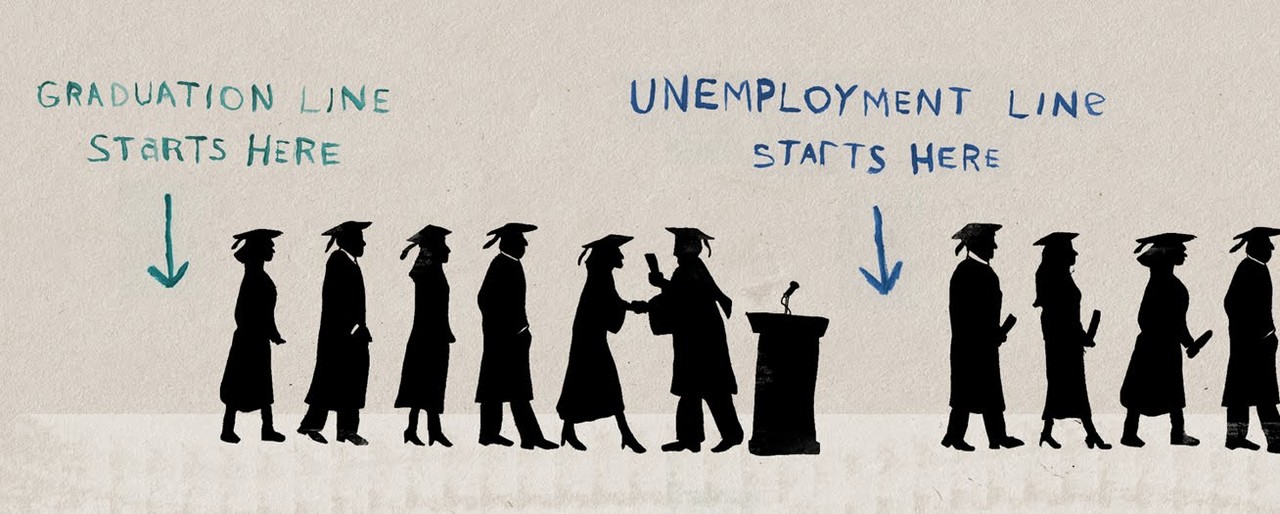
You’ve heard the quotes a thousand times. On LinkedIn, from career advisors, from that successful keynote speaker. "Just work hard and you'll get there." "Success is the sum of small efforts, repeated day in and day out." "The harder you work, the luckier you get."
Let's be clear: this advice isn't wrong, but it is dangerously incomplete. Hard work is a necessary requirement for success. It's the ticket to the game. But it is absolutely, unequivocally, not sufficient. Sometimes, you just need to be lucky.
This is the unspoken truth of the job hunt, and it’s a conversation we need to have, especially now.
The Myth of Meritocracy and the Curse of Survivorship Bias
We love stories of success. We study the habits of billionaires and listen to podcasts with founders who "made it." The problem is, we only ever hear from the winners. For every successful person who attributes their journey solely to hard work, there are thousands of people who were just as smart, just as talented, and worked just as hard, but were a little bit "unlucky." They started a company during a downturn. Their brilliant idea was just two years too early. They were the fifth person interviewed for a role that only had four spots.
This is survivorship bias. We're drawing conclusions from a pool of people who have already succeeded, ignoring the massive, silent cohort who didn't, and then we treat that skewed data as a universal blueprint for success. It creates a narrative that any failure is a purely personal one, which for a new grad, can be crushing.
Why Luck Matters More Than Ever
Let's be brutally honest: the job market for graduates right now is tough. As a consequence of economic uncertainty, many large companies are reducing the number of new graduate positions they open. The funnel is getting narrower. When you have a thousand highly qualified candidates competing for a handful of roles, the difference between getting an offer and a rejection often comes down to chance.
This is why the old advice is failing. The need to strategically increase your "luck" is no longer just helpful; it's the key to the entire game.
Increasing Your "Luck Surface Area": An Updated Playbook
So what can you do? You can't control luck, but you can act in a way that makes it more likely for luck to find you.
The "numbers' game" of sending out hundreds of applications is still important—it’s basic probability. But these days, volume alone doesn't suffice. When competition is this fierce, you also need to be different. This means showing genuine, deep interest in the roles you really want.
Before you apply, try to understand what the role is actually about. Find people on LinkedIn who do that job and see what they talk about (and reach out to them!). Try to form a picture of the day-to-day reality.
Why? Because chasing something you don't know enough about is a recipe for disappointment. You might land a job only to realize it’s a terrible fit for your personality and goals (spoiler: this happens in the majority of cases). The job hunt isn't just about getting a job; it's about getting the right job for you. So, although it is extremely challenging, it's critical to start understanding what you might like and what you definitely won't. This self-awareness is how you optimize your future decisions and aim your efforts where they'll have the most impact.
The Takeaway: Control What You Can Control
The job search is a combination of strategy, effort, and luck. You can't control the luck, so obsessing over it will destroy your mental health. Acknowledge its role, accept that some outcomes are out of your hands, and then pour every ounce of your energy into your strategy and your effort.
Work hard, yes. But also work smart. Play the numbers game, but give special attention to the opportunities that genuinely excite you. Be so prepared that when a lucky break finally comes, you're ready to seize it with both hands. That is how you win a game where the rules aren't always fair.