AI Won't Replace You? Let's Be Honest.
You’ve heard the saying a dozen times: “AI won’t replace you, but someone who uses AI will.” It’s a comforting, optimistic thought. It’s also, in my opinion, mostly nonsense designed to soften a much harsher reality, especially in small companies trying to scale too fast or in largely inefficient big companies. Let’s be honest: companies are driven by a primary directive to reduce costs and increase efficiency. When a technology emerges that can do the work of multiple people, the end goal isn’t just to make those people more productive—it’s often to reduce the number of people needed. The recent waves of layoffs at Microsoft and other Big Tech giants, even as they invest billions in AI, aren't a coincidence; they are a sign of what's to come.
My prediction for the next two years is that AI will be incredibly disruptive, and the "someone using AI" will, in many cases, be a smaller team or even a single person leveraging an army of AI agents. The nature of value is shifting, and we need to adapt or risk becoming redundant.
The Commoditization of Code
For years, the core skill of a software engineer was the ability to translate human ideas into machine-readable code. That barrier to entry created a moat. But AI, particularly advanced code generation models, is rapidly turning code into a commodity. The act of writing boilerplate, debugging simple errors, or even scaffolding entire applications is becoming dramatically easier. Soon, almost anyone with a clear idea will be able to "build."
When the "how" becomes easy, the "what" and "why" become everything. This is where the real division will happen. In a large corporate setting, many roles focused purely on technical execution without a connection to the business strategy could be replaced. If your job is to simply take a ticket, write the code as specified, and move on to the next, you are competing directly with AI. It’s a race you are unlikely to win.
Your Defense: Become the Business Strategist
So, how do you defend yourself? You stop thinking like a coder and start thinking like a business owner. Those who not only survive but thrive in the next era of tech will be the ones who deeply understand the company’s vision and the business side of things. They will be the ones who can identify problems, conceptualize solutions, and guide AI to build them.
The most valuable professionals will be those who can answer the critical questions:
- What is the core mission of our company right now?
- Which projects directly contribute to our key results?
- What are our customers really asking for, and how can we deliver that value faster?
Working on the core focus of the company, being adaptable, and having the courage to pivot as priorities change is the new "hard skill." AI becomes your tool, your superpower, to execute on that vision at a speed previously unimaginable.
The Big Disclaimer: The Human Element in a World of Ambiguity
Now for the crucial disclaimer: AI is not going to achieve full, autonomous replacement of human teams anytime soon. It's not just because internal documentation can be messy; it's because business goals themselves are often ambiguous. People frequently don't have a perfectly clear idea of what they want to achieve until they start a conversation.
A human-to-human interaction, where one can comfort, clarify, and help a stakeholder navigate their own uncertainty, is a deeply valuable process. An AI can't yet replicate the empathy and collaborative problem-solving needed to turn a vague idea into a concrete, valuable project. This human touch will remain a key differentiator.
My Two-Year Prediction: The Cycle of Hype, Mess, and Rebuilding
The next couple of years will be turbulent. Here's how I see the cycle playing out:
First, companies will aggressively hire those who understand AI and reduce personnel in other functions, hoping for massive efficiency gains. However, in their haste, many will over-correct. They'll fire too many people and discover that AI, without the right guidance, can create a significant mess—buggy features, misaligned products, and frustrated customers. We've already seen hints of this with companies like Klarna, who, after leaning heavily on AI for certain roles, found themselves needing to re-evaluate the human-in-the-loop component.
This will lead to a second wave: rehiring. But they won't be hiring for the same old roles. The people they bring back will be those needed to rebuild and fix things, and they'll need a new set of skills. The caveat is that these professionals must understand how AI acts and where its most likely mistakes come from.
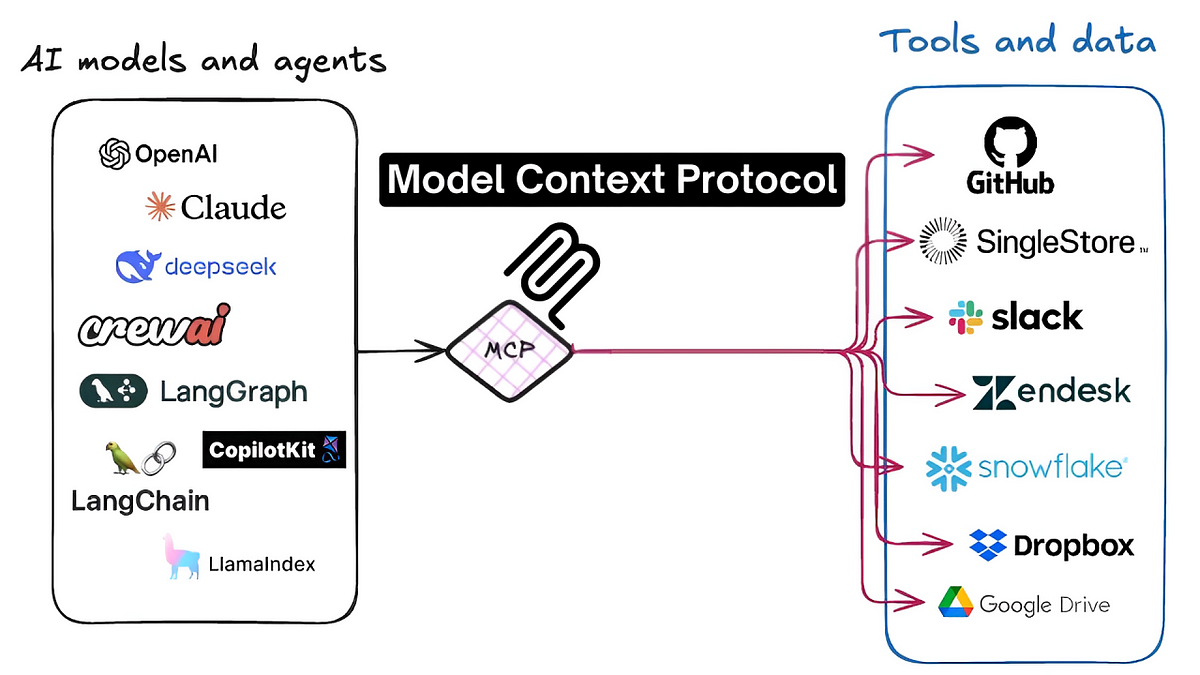
This is why leveraging and deeply understanding AI tools will be non-negotiable. Knowing your way around AI-native code editors like Cursor, mastering Microsoft Copilot to augment your workflow, and grasping how to manage agentic frameworks (for example, using Model Context Protocol - MCP) will be the key. Your value won't just be in fixing the code, but in diagnosing why the AI went wrong and implementing systems to prevent it from happening again.
Your defense isn't to code faster; it's to think better, manage the machines, and understand the business. The future of tech work isn't about being the best coder; it's about being the most valuable AI-augmented business problem-solver.